Do Gutter Guards Help With Pine Needles in Weirsdale? A Realistic Homeowner Guide
If you live in or around Weirsdale, you do not need a lecture on what pine needles can do to a gutter. You have probably seen the pattern already. The roof sheds a little after a windy day, needles gather along the edge, a summer downpour hits, and suddenly water is spilling where it should not. A week later, the same thing happens again.
That is why so many homeowners start looking at gutter guards for pine needles Florida homes deal with every year. The hope is simple enough: install a guard once, stop climbing ladders so often, and avoid the overflow that comes with our rainy season. The reality is a little more nuanced.
Gutter guards can help with pine needles, but they are not magic. In a place like Weirsdale, where pine debris, leaf litter, humidity, and hard summer rain all show up together, the right guard can reduce cleaning frequency. The wrong guard can create a different maintenance problem, sometimes one that is harder to spot until water is already going over the front edge.
The practical question is not whether guards are good or bad. It is whether a certain type of guard makes sense for your roof, your tree cover, your existing gutter setup, and your willingness to keep up with occasional maintenance anyway.
The main issue is not just debris, it is Florida rain
A clogged gutter in a dry climate is annoying. A clogged gutter in Central Florida can become a fast-moving drainage problem.
Our summer rainy season brings repeated heavy storms, and tropical weather can stack one wet week on top of another. When debris sits in a gutter during that stretch, it stays damp, compacts, and becomes harder to flush out naturally. UF/IFAS guidance for storm prep specifically points homeowners toward clearing needles, leaves, and other debris from roofs and gutters. That advice matters because a gutter does not need to be packed solid to fail. A partial clog at the wrong spot can be enough to send water over the lip or back toward the fascia.
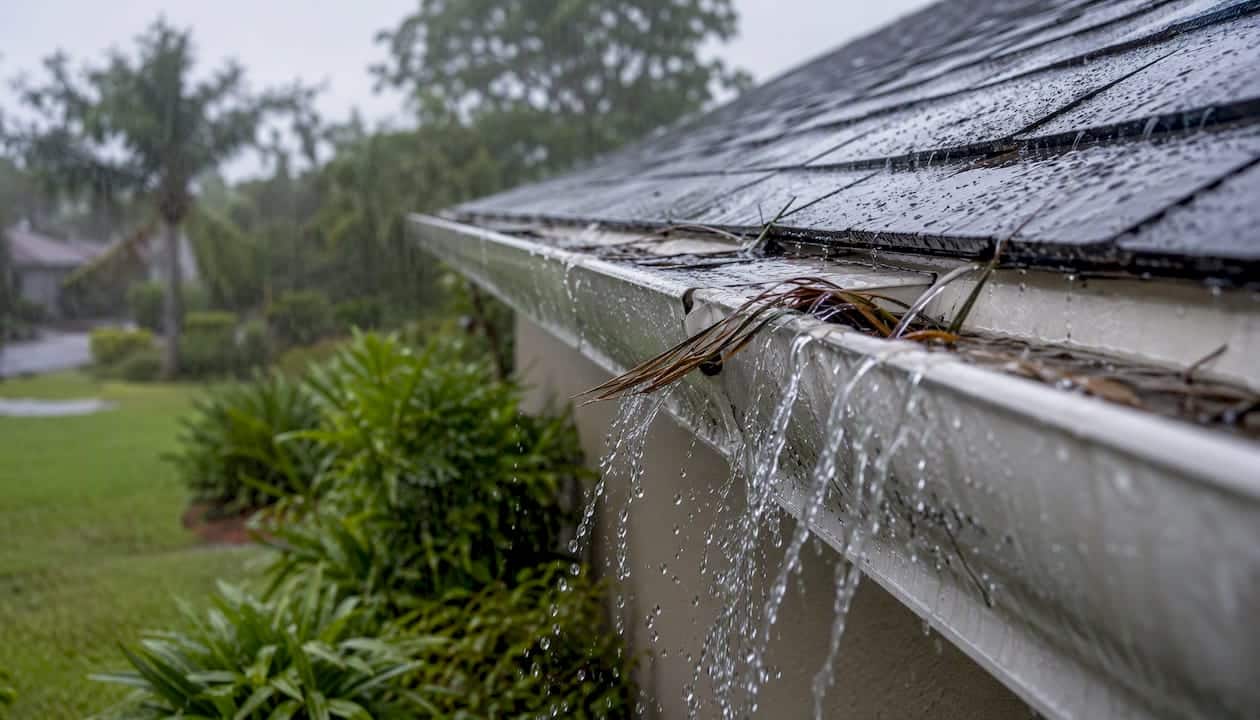
Pine needles are especially tricky because they do not behave like broad leaves. They can lie flat, weave together, bridge over openings, and settle into downspout outlets. If oak leaves or acorns are part of the mix, the problem gets heavier and messier. Florida guidance also points out that yard debris and leaf litter should be kept out of gutters and storm drains because runoff can carry that material into waterways. So this is not only about keeping your house dry. It is also about not letting roof debris wash into the drainage system during storms.
That is the backdrop for any honest conversation about guards. They are being asked to perform during some very unforgiving conditions.
What gutter guards actually do well
The best case for a guard is not “never clean again.” The best case is “less debris gets inside, cleanup is easier, and water keeps moving longer between service visits.”
That is a worthwhile goal. On homes with regular pine needle drop, even a moderate reduction in buildup can make a difference. Instead of cleaning after every rough spell of wind and rain, you may be able to stretch maintenance intervals. You may also reduce the amount of soggy organic material sitting in the gutter trough through humid weather, which is helpful because UF/IFAS maintenance guidance calls for cleaning gutters and downspouts as needed and removing organic buildup, especially in summer.
A guard can also help with the larger pieces. Oak leaves, twigs, and clumps of mixed roof debris are often easier to stop at the top than to remove after they have settled and started to decompose inside the channel.
Where homeowners get disappointed is when they expect the system to be self-cleaning under all conditions. Pine needles do not always cooperate. Some guards block them well. Some let them in. Some collect them on top, which can still be manageable, but only if someone clears the surface before a storm cycle turns a light layer into a wet mat.
Why pine needles are harder than people expect
Needles are light when they fall and stubborn when they gather. A few can slip through openings that would stop larger leaves. A bigger mass can tangle together across the surface of a guard. Once moisture and fine roof grit get involved, that layer can cling more than homeowners expect.
I have seen people judge a guard by looking up from the ground and saying, “It looks clean.” Then the next downpour shows a thin sheet of water running over one section, because the top surface had collected a narrow band of needles that slowed intake at exactly the wrong point. From the yard, it looked fine. During a hard storm, it was not.
That is why realistic expectations matter. In a pine-heavy setting, guards should be viewed as debris management tools, not debris elimination tools.
The condition of the gutter matters as much as the guard
A guard installed over a poorly pitched, undersized, or partly damaged gutter will not fix the underlying weakness. It may hide it for a while.
This part gets overlooked often. Homeowners understandably focus on the cover, but water still has to enter the gutter, travel through it, and exit through the downspout without backing up. Florida building guidance requires gutters and downspouts to be sized and discharged in accordance with the code, and exterior gutters and leaders should be made of metal or approved plastic and securely fastened with corrosion-resistant fasteners. In plain language, the whole this page path matters. If the gutter is pulling away, if the downspout outlet catches debris, or if drainage at the ground is poor, a guard only addresses one piece of the problem.
That is true whether you are looking at seamless gutters Ocala FL contractors install, older aluminum gutters Central Florida homes have had for years, or a section needing gutter repair Wildwood FL homeowners might put off a little too long. The cover cannot compensate for a system that is already struggling.
Before thinking about guards, look at the full water path
If you are trying to decide whether guards are worth it, inspect the system in this order:
- Check whether water currently overflows at the gutter edge, backs up near corners, or spills heavily at downspouts during rain.
- Look for sagging sections, loose fasteners, separated joints, or visible standing debris.
- Confirm the downspouts actually discharge away from the house and do not immediately dump into an area that stays saturated.
- Notice which trees are dropping the most, especially pine and live oak, and where that debris lands on the roof.
- Clean the system first, then judge performance during the next strong rain.
That short exercise tells you much more than product marketing ever will. If the gutter cannot handle clean-water flow when freshly cleared, the issue may be sizing, pitch, drainage layout, or wear. If it performs well right after cleaning and then fails once debris returns, a guard may be a good fit.
This is also where questions about gutter sizes for Florida homes come into play. Bigger is not automatically better, and smaller is not automatically cheaper in the long run if it cannot keep up. The right size depends on the roof area and the amount of water that has to move through the system. Florida code governs sizing and discharge, so if you are replacing or modifying a setup, that part should be treated seriously rather than guessed at from a big-box shelf.
When gutter guards tend to make sense in Weirsdale
Guards are often a reasonable investment when the home sits under regular pine fall, the gutters are in good condition, and the owner wants to cut down on cleaning frequency rather than eliminate maintenance entirely.
They also make sense when ladder access is difficult or risky. A single-story ranch with easy access is one thing. A roofline with awkward sections, landscaping below, or a history of overflow near entries is another. In those cases, reducing service frequency has real value beyond convenience.
There is also a storm-prep angle. Florida storm guidance consistently emphasizes clearing gutters and storm drains before severe weather. A guard that keeps most large debris out can make pre-storm cleanup faster. You still need to inspect the system, but the work may be lighter and less messy.
For some homeowners, the case is strongest after years of paying for repeat cleanings. If you have had regular gutter cleaning Fruitland Park FL style service, and the crew keeps finding the same pine-heavy buildup, a guard may lower how often that service is needed. Not always, but often enough to justify a closer look.
When they may not solve much
There are homes where guards do not deliver enough benefit to be worth the cost. Dense tree cover is one example, especially where fine debris falls constantly and settles across long roof edges. In those cases, the top of the guard can become the new collection point. Debris stays out of the trough, which is good, but the intake surface still needs attention.
Another weak scenario is a system with poor downspout performance. If the outlet area clogs easily or the discharge point is a problem, a guard at the top is only a partial fix. The same goes for old or damaged gutters. If sections are loose, corroded, or improperly sloped, replacement may deserve priority over accessories.
That is where conversations about gutter replacement Gainesville FL homes sometimes need become more important than guard selection. Likewise, if you are comparing K-style gutters Lady Lake FL providers offer, the profile, capacity, and installation quality may have more impact on performance than the add-on guard alone.
Material and setup matter more than buzzwords
Homeowners often get pulled into brand language, but the practical concerns are simpler. You want a system that sheds water effectively, resists corrosion, stays fastened securely, and can still be serviced.

Metal gutters are standard for a reason, and Florida code recognizes metal or approved plastic systems with corrosion-resistant fasteners. Many homes use aluminum gutters Central Florida contractors install because they are common and familiar in the market. Whether the gutter is sectional or seamless, new or existing, the key question is how the guard interacts with the actual conditions on the house.
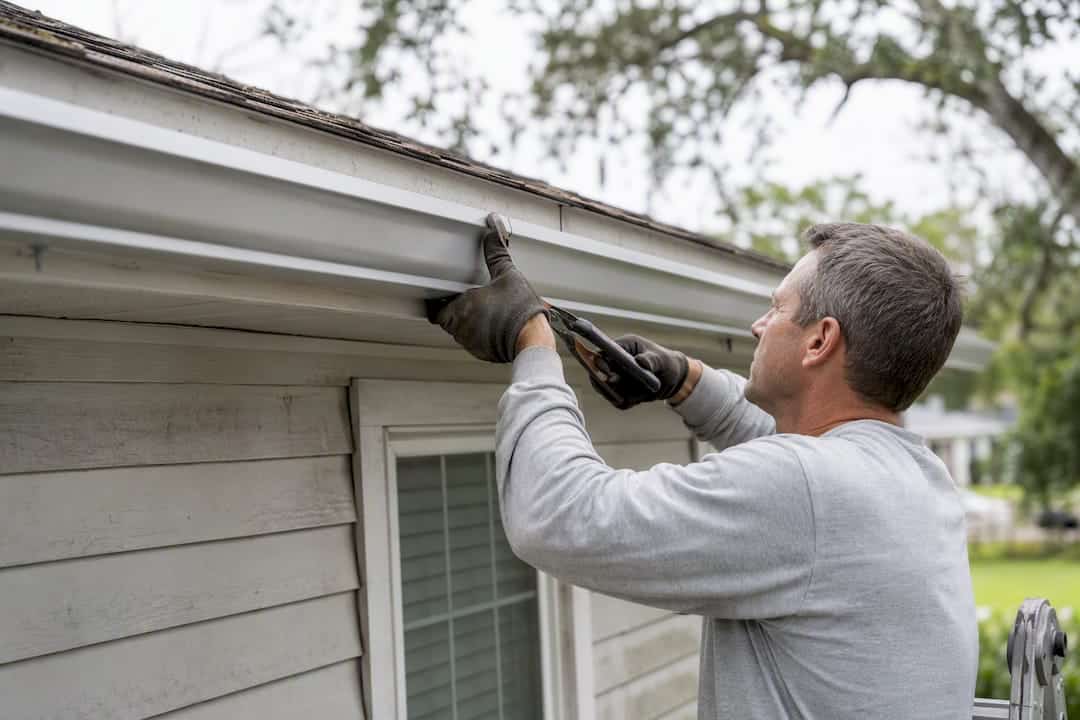
A setup under pines should be judged on two things. First, does it keep a meaningful amount of needles out of the trough? Second, can the homeowner or service company still inspect and clear problem spots without turning a small maintenance task into a major project?
Those questions sound basic, but they prevent a lot of frustration.
Do not forget the downspouts
Many gutter discussions stop at the roof edge, but the water still has to leave. A clean gutter feeding a restricted downspout is still a failing system.
That matters for routine rain, and it matters even more for storm-ready gutters Florida homes need when summer weather turns rough. If the downspout outlet is where debris tends to compact, a guard may reduce what gets there, but it will not guarantee free flow. Downspouts still need inspection. The discharge area at the ground still needs to direct water away appropriately.
This is one place where local phrases like downspout drainage Newberry FL are not just search terms, they reflect a real issue homeowners run into all over the region. The gutter can be technically clear, yet the system still underperforms because the water is not being moved away cleanly after it exits.
A realistic maintenance plan after guards are installed
The most satisfied homeowners are usually the ones who understand that guards reduce chores, not erase them.
A sensible routine looks like this. After heavy needle drop, glance at the roof edge and check whether debris is collecting on top of the guard. Before tropical weather or a prolonged rainy stretch, inspect the gutter line and downspouts. After a major storm, look for overflow marks, wash patterns, or any section where water clearly missed the intended path. If you notice repeated trouble in one area, that spot deserves closer evaluation even if the rest of the system seems fine.
There is also a yard-care connection here that people forget. UF/IFAS encourages keeping leaves and pine needles on-site as mulch rather than letting them wash away. That is smart for drainage and for cleanup. When roof and yard debris are managed early, less ends up migrating into gutters and storm drains.
What to ask when hiring someone
If you are hiring a gutter contractor Florida homeowners should expect more than a sales pitch. You want clear answers grounded in how the house currently performs.
Ask whether the existing gutters are sound enough for guards. Ask whether the downspouts and discharge paths are adequate. Ask whether the installer expects the chosen guard to reduce cleaning frequency or mainly reduce the amount of debris entering the trough. Those are different outcomes, and honest contractors will say so.
You should also ask how the system will be serviced later. If a corner, outlet, or valley section clogs, what is involved in getting access? Some guard setups are easy to inspect. Some are not. The best choice is often the one that balances protection with practical maintenance.
If a contractor skips over gutter condition, fasteners, pitch, and downspout discharge and wants to talk only about the cover, that is a warning sign. A thorough installer should think about the whole assembly because code and common sense both require that the gutter and downspout system be properly sized, discharged, and securely attached.
The answer most Weirsdale homeowners actually need
So, do gutter guards help with pine needles in Weirsdale?
Yes, often they do. They can cut down on how much debris gets into the gutter, reduce how often full cleanouts are needed, and make storm prep easier. On the right home, that is a meaningful improvement.
No, they are not a cure-all. Pine needles are one of the harder debris types to manage. They can collect on top, slip through certain openings, and still create trouble at critical points. Guards also do nothing to correct a gutter that is damaged, poorly sloped, undersized, or connected to weak downspout drainage.
For most homeowners, the smartest approach is not to ask, “What guard should I buy?” Start with, “How well does my current system handle clean water, and where does it fail once debris shows up?” If the gutters are otherwise sound, a guard may be a very practical upgrade. If the system is already struggling, repair or replacement deserves attention first.
That is the realistic homeowner guide. Use guards as part of a drainage strategy, not as a substitute for one. In Florida, especially through summer rain and storm season, that distinction saves a lot of frustration.