K-Style Gutters in Lady Lake FL: How Their Shape Handles Fast Roof Runoff
Summer rain in Central Florida has a way of turning a quiet afternoon into a hard sheet of water in a matter of minutes. In places like Lady Lake, that matters more than many homeowners realize. Once a roof starts shedding water fast, the gutter system has a short window to catch it, move it, and get it away from the house before it spills over edges, splashes against walls, or dumps too much water near the foundation.
That is why conversations about K-style gutters Lady Lake FL tend to go beyond appearance. Homeowners are not just picking a trim detail. They are trying to manage sudden runoff during the rainy season, prepare for tropical weather, and reduce the chance that leaves, pine needles, and acorns will turn a working gutter into a clogged trough at the worst possible time.
The first thing I tell people is simple: the profile matters, but it never works alone. A gutter can have a practical shape and still fail if it is undersized, pitched poorly, clogged with debris, or connected to downspouts that cannot move water away efficiently. In Florida, those details are not minor. They are the whole job.
Why runoff moves so fast in this part of Florida
Anyone who has watched a roof during a hard summer storm has seen the problem. Water does not trickle off gradually. It races down shingles and concentrates at the eaves. Add wind, humidity, and debris from surrounding trees, and the system gets stressed quickly.
Verified guidance from UF/IFAS backs up what homeowners already see in real life. Gutters and storm drains can become clogged with debris during storm preparation, and clearing needles, leaves, and other debris from roofs and gutters is part of getting ready for rough weather. That is especially relevant in the Lady Lake, Leesburg, Wildwood, Fruitland Park, Ocala, and Gainesville corridor, where tree litter is a routine maintenance issue rather than an occasional nuisance.
Live oak leaves and acorns are not just messy. UF/IFAS notes that leaf litter and yard debris washing into stormwater systems can contribute to pollution, which gives gutter maintenance another layer of importance. This is not only about keeping water off your fascia board. It is also about keeping organic buildup from moving downstream when storms hit.
What homeowners mean when they ask about K-style gutters
When people ask about K-style gutters, they are usually trying to solve one of three problems. The first is overflow during heavy rain. The second is frequent clogging from oak leaves or pine needles. The third is a worn system that has begun to sag, leak, or pull away from the house.
In practical terms, a K-style profile gives the installer and homeowner a common starting point. It is a familiar option, widely discussed when people compare gutter sizes for Florida homes or price out aluminum gutters Central Florida homeowners typically choose. The shape is part of the conversation because it affects how the gutter presents at the roof edge and how water travels through the trough, but shape is only one factor in actual performance.
That is worth saying plainly because marketing often reduces gutter decisions to style names. Real performance comes from the combination of profile, size, slope, fastening, downspout layout, and maintenance. Florida code language underscores that point. Gutters and downspouts must be sized and discharged in accordance with the applicable building and plumbing code, and exterior gutters and leaders should be made from approved materials and secured with corrosion-resistant fasteners. A good-looking profile does not override basic drainage math or proper installation.
Shape helps, but capacity and discharge decide the outcome
A fast roof runoff problem is really a water volume problem. During heavy rain, the gutter has to catch a large amount of water and keep moving it toward the outlets before the channel gets overwhelmed. That is where homeowners often make a mistake. They look only at the gutter itself and forget that the downspouts finish the job.
If water enters the gutter easily but cannot leave quickly enough, the system still backs up. That is why discussions about downspout drainage Newberry FL homeowners deal with are relevant even if the home is farther south in Lady Lake. The principle is the same across these parts of Florida. A gutter system is only as strong as its discharge path.
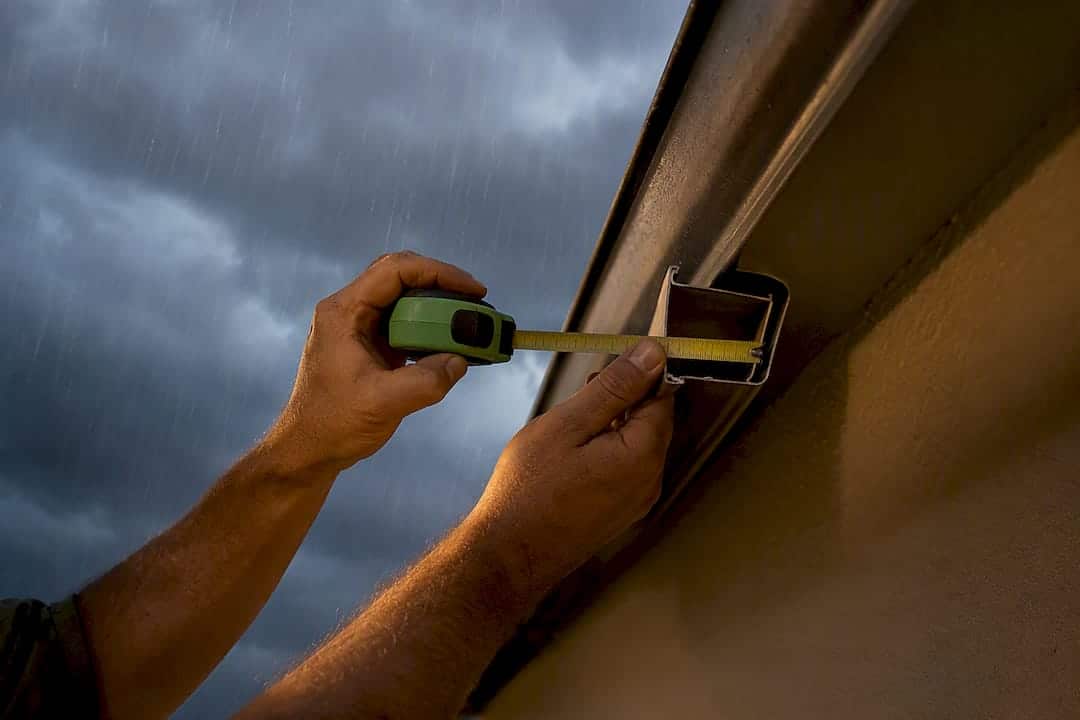
I have seen homes where the visible gutter line looked fine from the driveway, but one buried issue caused chronic overflow: debris packed at the outlet, a downspout too small for the roof section it served, or discharge that dropped too close to the structure. The owner often assumed the gutter shape was the problem. In reality, the water had nowhere to go.
That does not mean profile is irrelevant. It means profile must be judged in context. A K-style gutter may be a practical choice for a Florida home, but it still needs the right sizing and a clear route out through the downspouts.
The debris factor, which is often the real failure point
In this region, gutters rarely fail in laboratory conditions. They fail with leaves in them, with pine needles in the corners, with acorns at the outlets, and with a summer storm arriving after weeks of buildup.
UF/IFAS guidance is blunt on this subject. Clean gutters and downspouts as needed, remove organic buildup, and pay special attention in summer. That advice lines up exactly with what crews see on service calls. A gutter that could have handled runoff when clean starts to overflow because its working depth has been cut down by wet debris.
Pine needles deserve special mention because they create a different kind of problem than broad leaves. They do not always form one obvious clog. Instead, they knit together into mats that trap smaller particles and slowly narrow the flow path. That is why gutter guards for pine needles Florida homeowners ask about should be discussed carefully. Guards may reduce what gets into the trough, but they are not magic. On homes surrounded by pines, some guard designs still need regular inspection because needles can collect on top, https://coastalroofedge719.quantlynix.com/posts/the-step-by-step-gutter-guard-installation-process-for-homes-in-the-eustis-area bridge across openings, or build up around valleys and roof edges.
Oak-heavy properties create another pattern. Leaves, twigs, and acorns often gather at the outlet first, so the top of the gutter may look only mildly dirty while the drainage point is almost blocked. That is where routine gutter cleaning Fruitland Park FL homeowners schedule can make the difference between a controlled storm and a wet mess at the corners of the house.
Why material and fastening matter in Florida weather
There is a reason aluminum gutters Central Florida homeowners commonly consider come up so often in conversations with contractors. Exterior gutter systems in this climate need to deal with moisture, heat, and repeated storm cycles. Building guidance emphasizes approved materials and corrosion-resistant fasteners, and that is not a technicality.
Fasteners take more abuse than people think. They hold weight from standing water, soaked debris, and the sudden force of runoff during storms. If the attachment points loosen or corrode, the system can lose pitch or pull away from the fascia. Once that happens, even a correctly sized gutter may stop draining properly.
This is also why replacement and repair decisions should not be based only on whether the gutter still hangs in place. A damaged section may continue to catch some water while quietly losing alignment. Homeowners in need of gutter repair Wildwood FL service often discover that the visible issue, perhaps a leak at a seam or a drip at one corner, is connected to a broader problem with slope, outlet blockage, or fastening.
On the other hand, not every problem calls for a full tear-off. Sometimes a targeted repair is enough. Sometimes age, repeated leaks, or widespread separation makes gutter replacement Gainesville FL or seamless gutters Ocala FL worth discussing. The right choice depends on condition, not just age.
Seamless systems and what they do well
A lot of homeowners ask whether seamless gutters change storm performance. The honest answer is that they can help with leak reduction by limiting joints along the run, but they do not remove the need for proper sizing, proper discharge, and regular maintenance.
That is an important distinction because people sometimes expect a seamless system to solve overflow by itself. It will not. If a gutter fills with organic matter or the downspout chokes at the outlet, the fact that the run has fewer seams will not keep water from spilling over.
Still, there is a practical reason seamless gutters Ocala FL contractors often recommend them when an older system has multiple problem spots. Fewer joints can mean fewer places for leaks to develop over time. In a humid, storm-prone region, that can be a meaningful upgrade, especially if the old system has already shown repeated failure at connections.
How to think about gutter size without guessing
Homeowners love a simple answer to sizing, but there is no one-size-fits-all number I would feel comfortable giving without seeing the house. The verified guidance we do have points in the right direction: gutters and downspouts must be sized and discharged according to code. That tells you two useful things.
First, sizing is not arbitrary. It should be tied to the building, not chosen by habit alone. Second, the downspout arrangement is part of sizing, not a separate afterthought. A larger gutter paired with poor discharge can still underperform, while a balanced system sized for the roof area and laid out correctly has a far better chance of staying under control during intense rain.
When homeowners ask about gutter sizes for Florida homes, the best answer is not a blanket number. The best answer is to evaluate the roof sections, the likely runoff concentration, and how the water exits. Valleys, long runs, and corners that collect roof water deserve special attention.
What storm-ready actually means
The phrase storm ready gutters Florida sounds like advertising language until you define it. In real terms, storm readiness is less about heroic hardware and more about disciplined preparation before the weather turns.
A storm-ready system usually comes down to a few very practical conditions:
- the gutters are clear of leaves, pine needles, and organic sludge
- the downspouts are open and discharging properly
- the fasteners are secure and not showing obvious corrosion or pull-away
- the roof edge and outlets are free of packed debris
- the system is not already leaking or sagging before the season starts
Those are not glamorous points, but they line up with both code-minded common sense and UF/IFAS maintenance guidance. They also line up with what homeowners regret skipping. The worst time to learn a gutter cannot keep up is during the first hard storm after a long dry spell.
A quick example from real maintenance patterns
A common call in this region goes something like this: the homeowner says the gutter “used to work fine” and now dumps water over one front corner during heavy rain. They assume the entire system needs replacement. Sometimes it does. Often it does not.
What turns up on inspection is usually more specific. One outlet may be choked with oak debris. Pine needles may have layered over months and created a dam. A downspout elbow may be the low point where organic sludge settled and hardened. The gutter itself may be structurally acceptable, but the water path is compromised.
That kind of job is a good reminder that performance is dynamic. A gutter that handled runoff last season may struggle this season if the surrounding trees changed, a nearby branch began dropping more litter, or a previous cleaning missed a blockage in the downspout. Maintenance is not busywork in Florida. It is part of design.
Choosing between repair, protection, and replacement
Most homeowners are deciding among three basic paths: maintain what they have, add protection to reduce debris entry, or replace a system that has reached the point where patching no longer makes sense. The right choice depends on condition and surroundings.
If the system is sound and the main issue is debris, regular cleaning and possibly a well-chosen guard may be enough. If the runs are leaking at multiple locations, sagging, or poorly secured, a repair may only buy limited time. If the home has a chronic overflow issue, the conversation should include not just replacing the visible gutter but also reviewing sizing and downspout discharge.
That is where local judgment matters. A property shaded by oaks may need a different maintenance plan than one bordered by pines. A home that sees repeated summer buildup may need more frequent service than a similar home with less canopy cover. No article can replace an on-site look.
What to ask when hiring someone for the job
When people are hiring a gutter contractor Florida homeowners often focus first on price. I understand that. But with gutters, the cheaper bid can become the more expensive one if it skips the details that matter in this climate.
A useful conversation with a contractor should cover the basics of sizing, discharge, fastening, and maintenance expectations. It should also address how debris from your specific landscape affects the recommendation. If your lot drops pine needles year-round, that should shape the plan. If live oaks load the roof valleys with leaves and acorns, that should shape the plan too.
Here are the questions worth asking before work begins:
- How are you determining the right gutter and downspout sizing for this roof?
- How will the system discharge water away from the house?
- What material and corrosion-resistant fasteners are you using?
- Based on my trees, what maintenance schedule do you recommend?
- If guards are proposed, how do they handle pine needles and oak debris?
Those questions do two things. They help you compare contractors on more than price, and they quickly reveal who is thinking about the whole drainage system instead of only the visible gutter run.
The practical takeaway for Lady Lake homeowners
For homes in Lady Lake and the broader Central Florida corridor, K-style gutters are best understood as one part of a larger stormwater management system at the roof edge. Their profile may be a good fit for many homes, but no shape can compensate for the issues that actually cause most failures here: clogged troughs, blocked outlets, inadequate discharge, loose fastening, and neglected maintenance before storm season.
The climate sets the terms. Rain can come hard and fast. Debris is not occasional. Pine needles, leaves, and acorns build up exactly where water needs a clear path. Building requirements reinforce the basics, approved materials, secure fastening, correct sizing, and proper discharge. UF/IFAS guidance reinforces the seasonal reality, especially the need to clear gutters and downspouts and keep organic matter from washing into the stormwater system.
If your current gutters overflow, do not assume the answer is just a different shape. Start with the bigger question: can your system catch water, move it, and discharge it cleanly under real Florida conditions? That is the standard that matters, whether you are planning routine gutter cleaning Fruitland Park FL, exploring gutter repair Wildwood FL, comparing gutter replacement Gainesville FL, or pricing seamless gutters Ocala FL.
A gutter earns its keep during the ugly weather, not the sunny week after installation. In Lady Lake, that is the test worth designing for.